Universal Joint Cross
Overview
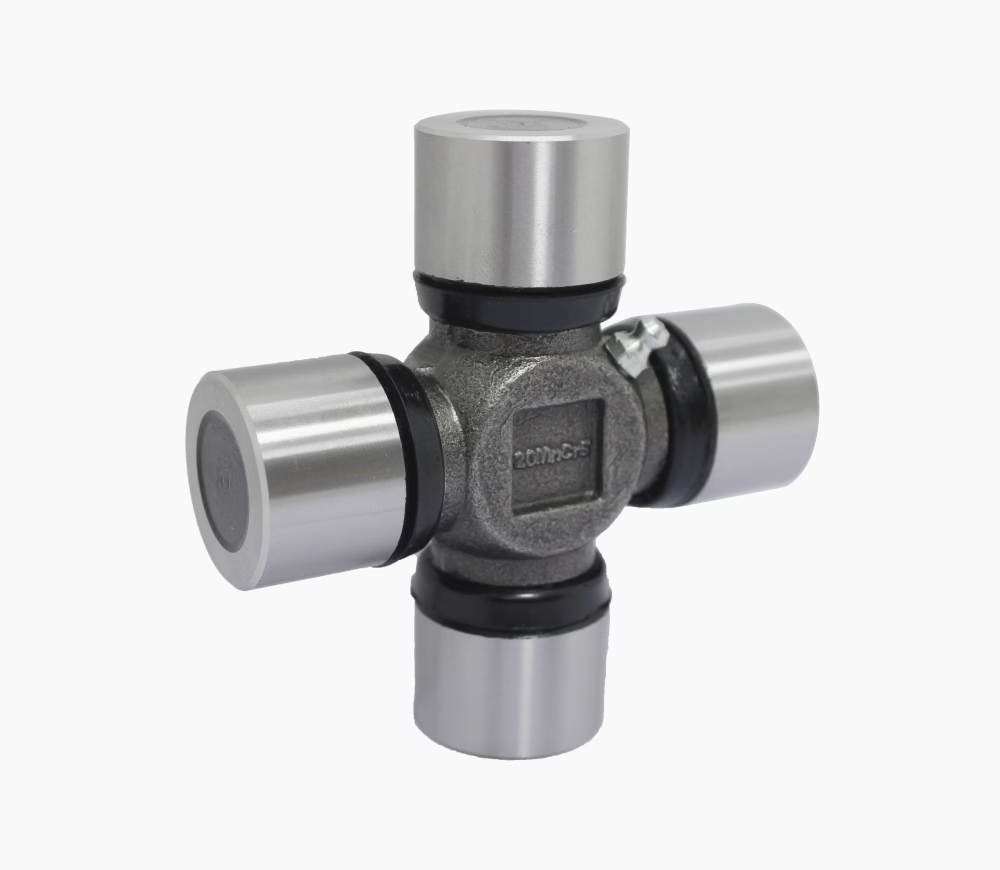
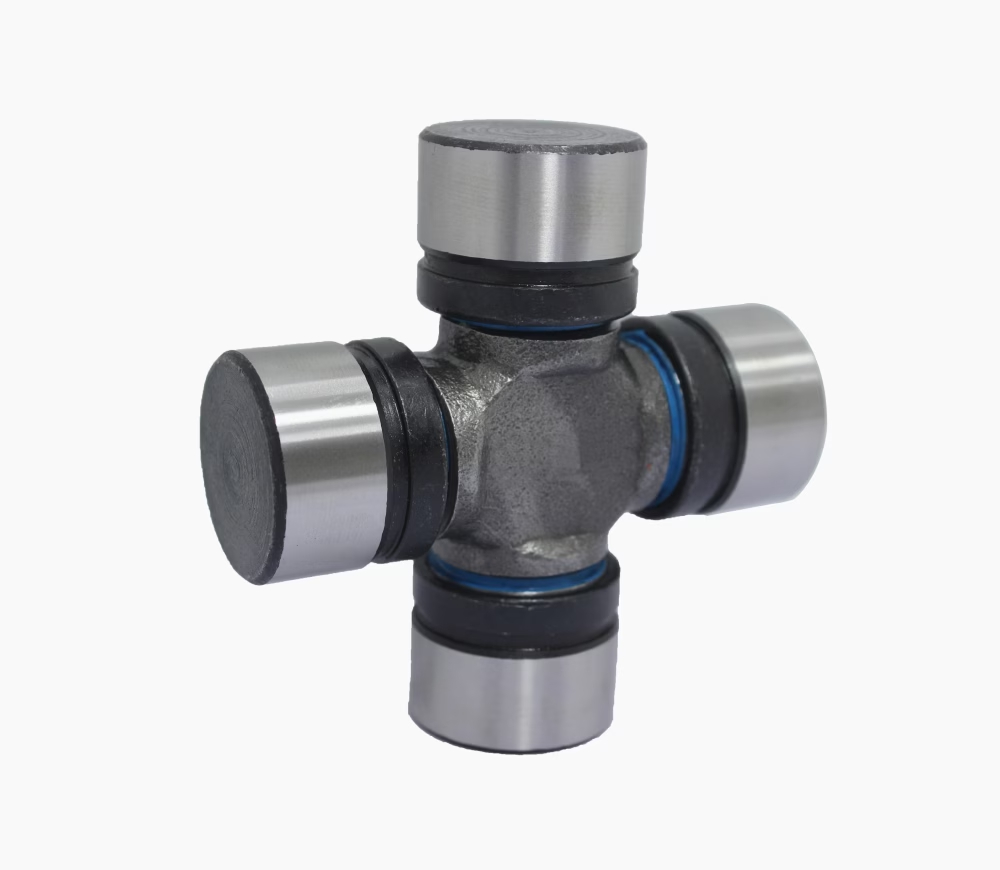
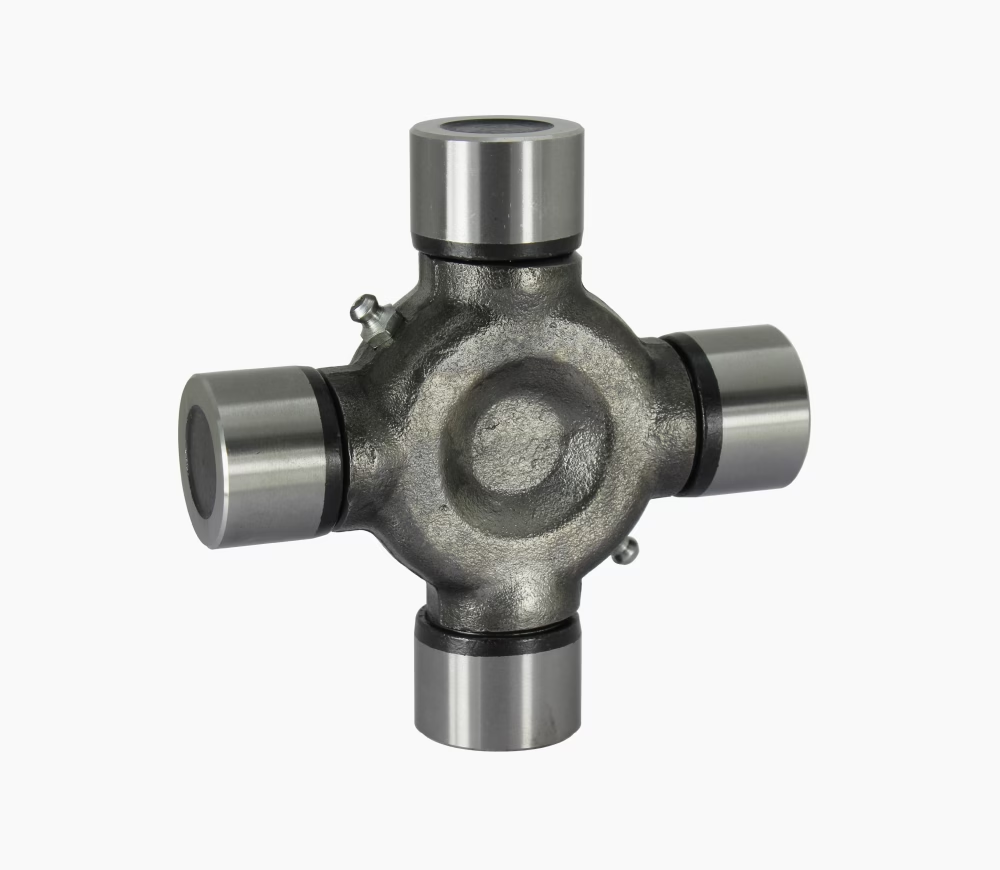
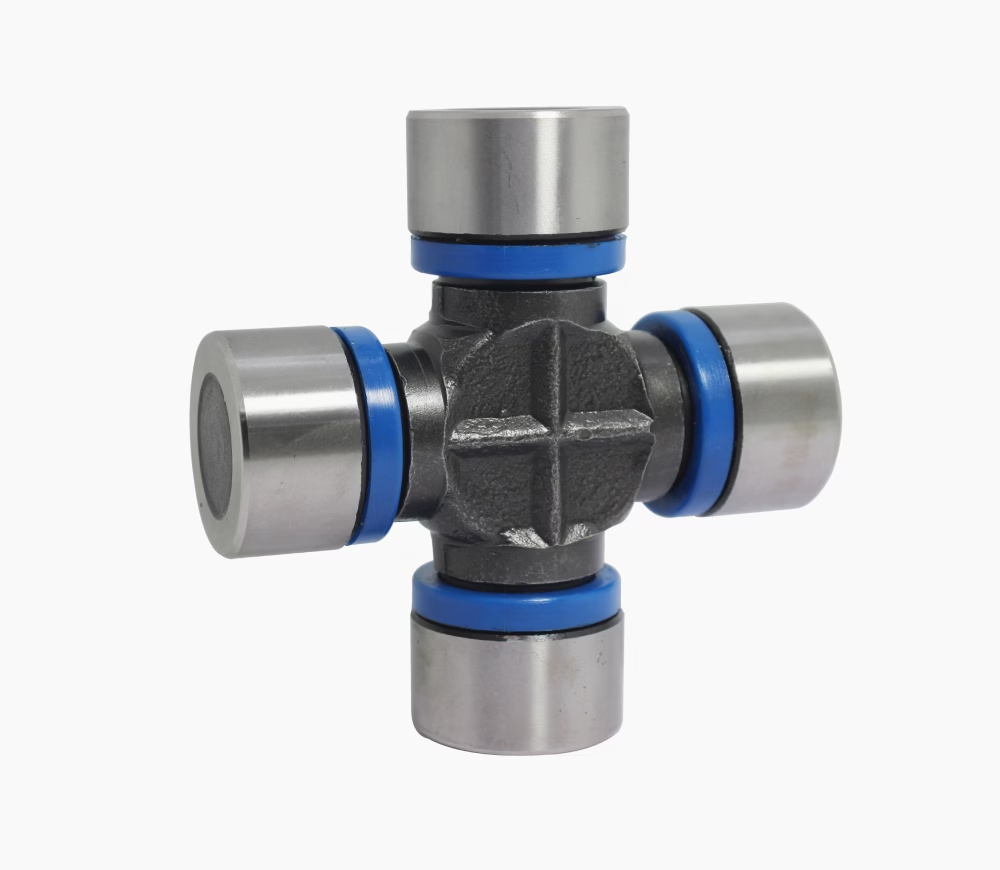
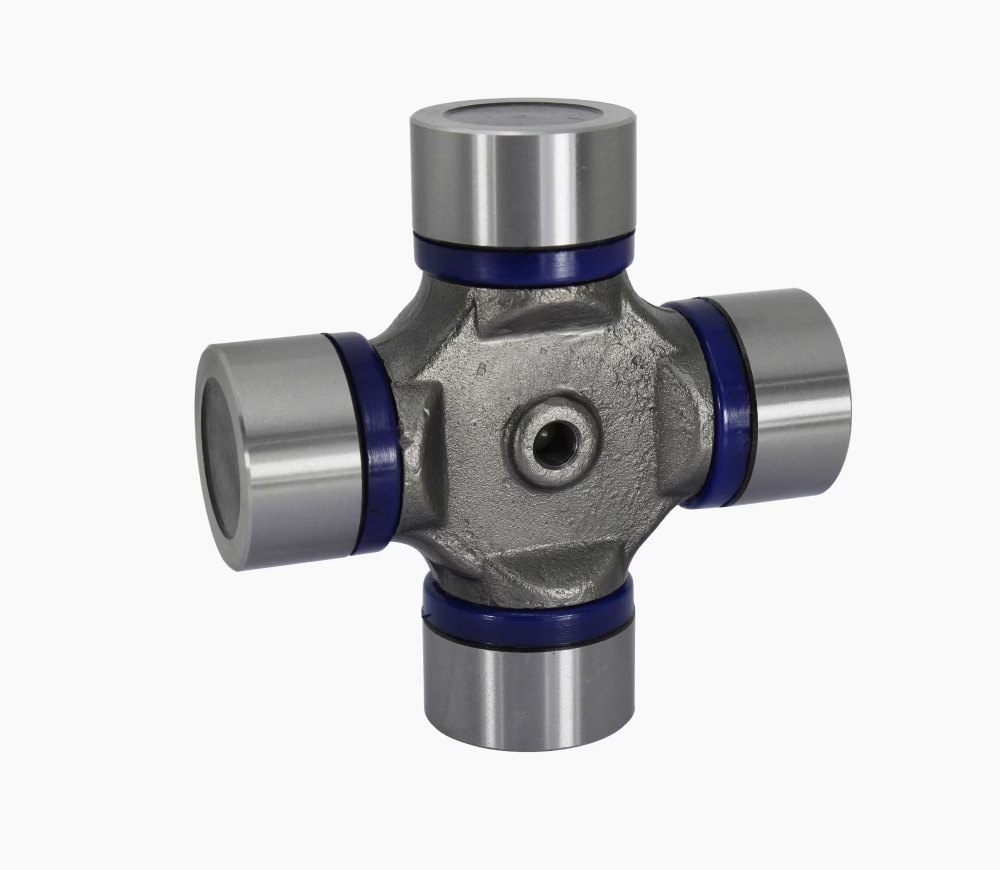
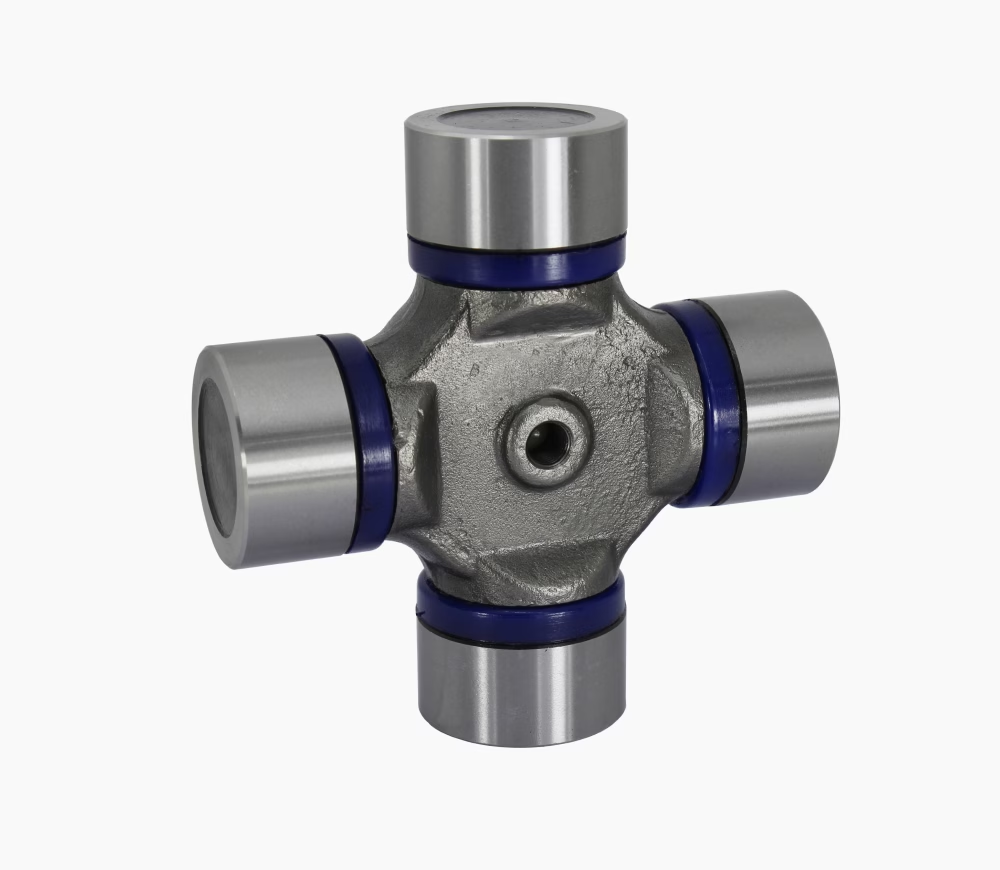
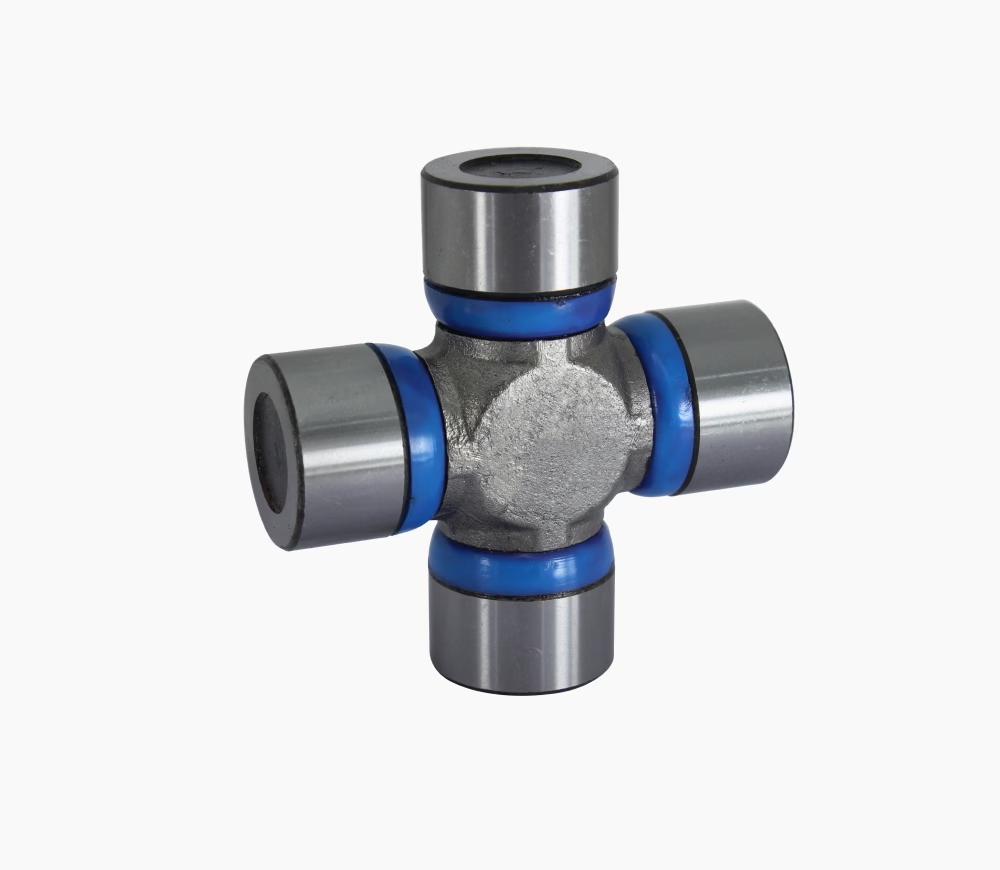
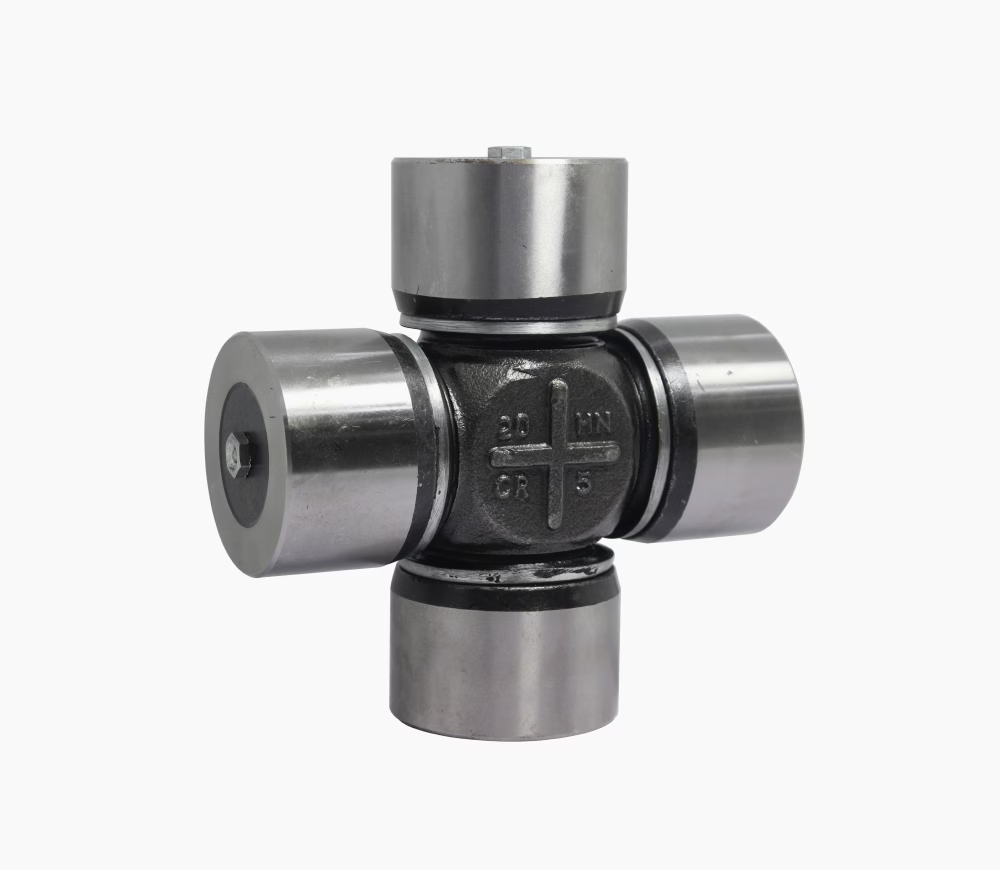
The Universal Joint Cross — also referred to as a spider, journal cross, or Cardan cross — is the primary flexing element in a propeller shaft assembly, transmitting torque between yoke ears across intersecting shaft axes under continuous angular articulation. The component operates in a cyclic bending and torsional load environment simultaneously.
For this reason, the cross demands:
- Controlled trunnion geometry for accurate bearing seat fitment.
- Sufficient surface hardness on trunnion journals to sustain needle roller bearing contact fatigue.
- Adequate core toughness to resist torsional and bending fatigue at the journal roots.
- Consistent surface finish to maintain sealing integrity at bearing cup interfaces.
At Sumex Auto Tech, UJ Crosses are produced through a defined sequence of CNC turning, milling, drilling, induction hardening, centreless grinding, and coordinate-controlled final inspection — maintaining dimensional and metallurgical consistency across production batches.
Why Dimensional Precision in UJ Crosses Matters
A common failure mode in driveline UJ crosses is premature needle roller bearing fatigue caused by trunnion diameter oversize or surface roughness outside the bearing manufacturer’s specification — leading to edge loading, stress concentration, and accelerated wear. Equally, undersize trunnions introduce bearing cup rattle, vibration, and early de-lubrication of the needle complement.
At Sumex, trunnion OD tolerance is held to ±0.005 mm at final inspection, centreless ground to the bearing seat Ra specification, and verified batch-by-batch before dispatch.
Key Manufacturing Parameters
Feature | Specification / Method |
|---|---|
Trunnion OD Tolerance | ±0.005 mm on functional diameter at final inspection |
Hardening Method | Induction hardening on trunnion journals and bearing seat zones |
Hardness Verification | Rockwell HRC per ASTM E18 — batch-by-batch |
Case Depth | Controlled per application requirement — verified before grinding |
Core Hardness | Maintained to preserve torsional fatigue resistance in cross body |
Grinding Method | Centreless ground — trunnion OD to final size and Ra specification |
Surface Finish (Ra) | Controlled for bearing fitment — specified per application |
Cross Width | Per customer drawing or platform specification |
Runout / Concentricity | Verified at final inspection using dial indicator |
Stress Riser Control | Blended radii at journal-to-body transitions — no sharp undercuts |
Traceability | Heat number linkage maintained — raw material to dispatch |
Available Locking Configurations
Type | Description & Application |
|---|---|
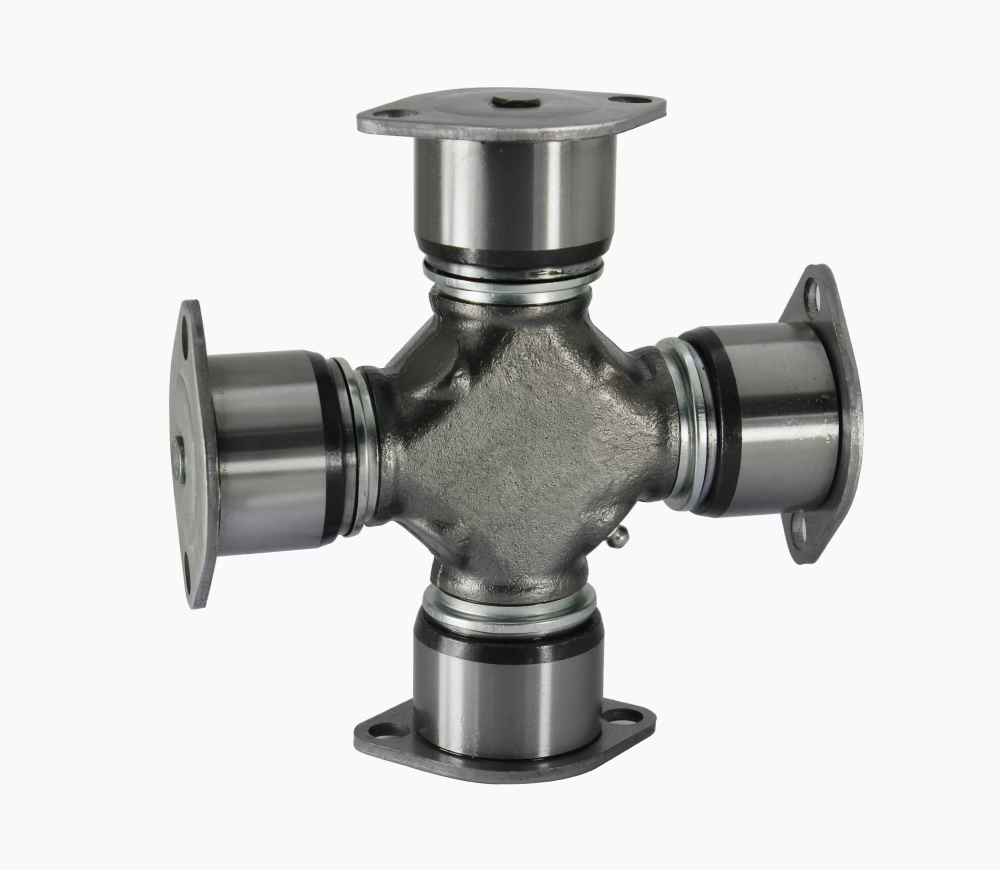
Inner Lock Type | Cross retained within yoke ears using internal circlip groove machined into the trunnion bore. Standard for most truck and trailer applications. |
Outer Lock Type | Retained using external snap ring on the bearing cup OD. Common in higher-torque heavy commercial vehicle configurations. |
Patti Type / Wing Bearing | Cross retained using a bearing plate / strap and bolt arrangement. Preferred for heavy-duty and off-highway applications where high angularity and torque reversal loads are present. |
Lubrication Options
Variant | Description |
|---|---|
Greaseable | Zerk / grease nipple fitted at cross centre. Recommended for applications with defined maintenance schedules. Allows field lubrication to extend bearing life in high-load or dusty environments. |
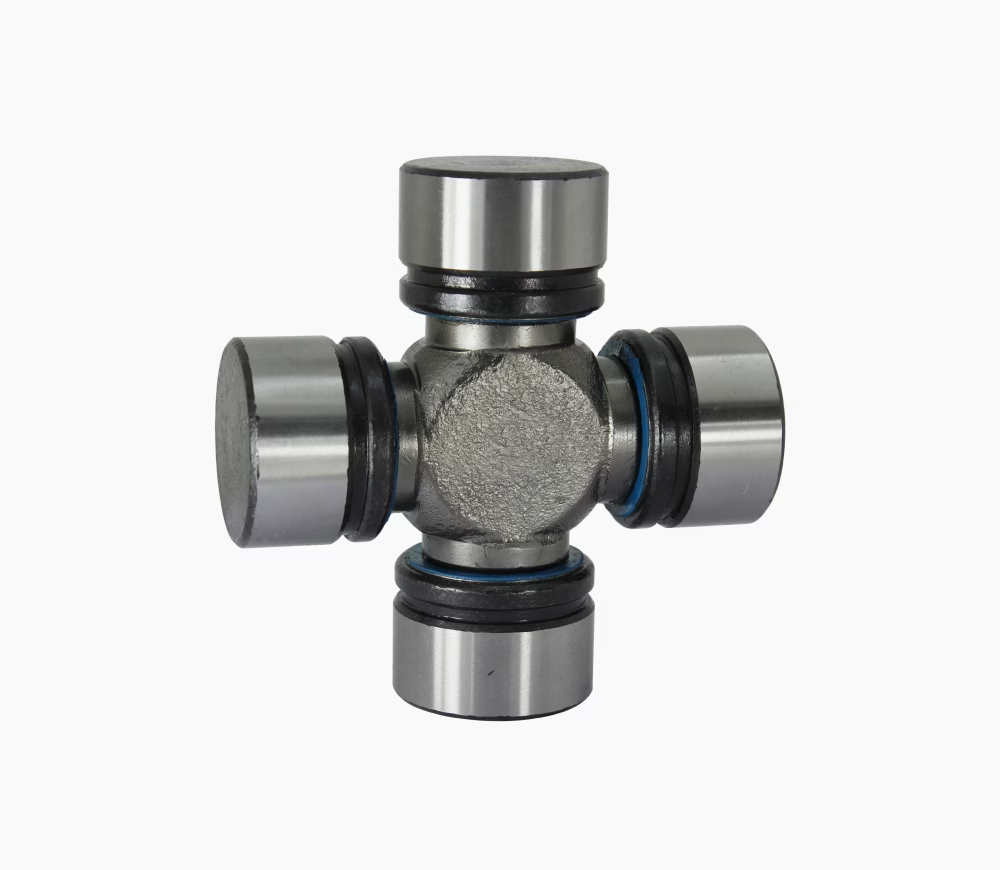
Maintenance-Free (Lubed-for-Life) | Sealed at assembly with controlled grease fill. No field lubrication required. Recommended for sealed shaft assemblies or where maintenance access is restricted. |
Seal & Environmental Protection
Bearing cup seals and dust covers fitted on each trunnion journal serve two functions: (1) retaining the grease complement within the needle roller bearing, and (2) excluding road contamination, grit, and moisture from the bearing contact zone. Both are critical to bearing fatigue life.
Seal material and design are selected based on the application operating temperature range and environmental exposure. High-temperature and cold-climate variants are available — specify operating conditions at time of RFQ.
Manufacturing Process Sequence
Turning (trunnion profile & cross body) → Milling → Drilling (lubrication ports/snap ring grooves / grease nipple bore) → Induction Hardening → Centreless Grinding → Final Inspection → Batch Release
- Turning establishes trunnion diameters, cross width, and body geometry
- Milling and drilling add functional features — grease ports, locking ring grooves, snap ring grooves
- Induction hardening applied to trunnion zones — case depth and HRC verified
- Centreless grinding brings trunnion OD to final size and Ra specification
- Final inspection: trunnion diameter, cross width, runout, concentricity, surface condition, hardness
Indicative Size Range
(Actual full range available in catalogue. Custom trunnion diameters and cross widths manufactured per drawing.)
Trunnion Ø (mm) | Cross Width (mm) | Typical Application | Comparable Series |
|---|---|---|---|
19.05 | 48.00 | Light commercial vehicle | Spicer 1000 series equivalent |
22.00 | 55.00 – 57.00 | Medium commercial vehicle | — |
25.00 | 63.80 – 64.00 | Medium–heavy truck | Spicer 1210 series equivalent |
27.00 | 70.00 – 81.80 | Heavy truck / trailer | — |
30.04 | 81.80 – 106.30 | Heavy truck / off-highway | Spicer 1310–1350 series equivalent |
34.94 | 106.00 – 126.20 | Off-highway / agricultural | — |
38.04 | 56.70 – 105.60 | Multi-application | Spicer 1410 series equivalent |
42.02 | 119.60 – 133.00 | Heavy truck platform (TATA 2518 series) | — |
47.62 | 134.80 – 134.90 | Turbo lock type / heavy off-highway | Spicer 1610 equivalent |
49.20 | 154.80 – 154.90 | TATA 4018, 4022 series | Spicer 1710 equivalent |
52.04 | 133.00 – 147.50 | TATA Hywa / AMW / Volvo FM7 | Spicer 1760 equivalent |
57.02 | 144.50 – 152.60 | TATA Hywa / AMW 1810 series | Spicer 1810 equivalent |
Materials
Material | Typical Specification |
|---|---|
Alloy steel | 42CrMo4, 20MnCr5, SAE 8620, EN 36, or equivalent — grade per application |
Carbon steel | Per EN 10277 / EN 10278 or equivalent — for lower-load applications |
Material basis | Controlled heat numbers, chemical composition verified at intake, linked to production lot |
Inspection & Quality Records
- In-process inspection at turning, hardening, and grinding stages — non-conformances caught before the next operation
- Trunnion OD, cross width, runout, and concentricity verified at final inspection
- Hardness testing per batch — Rockwell HRC per ASTM E18
- Surface condition checked — no sharp edges, no grinding burns, no undercuts at journal root transitions
- Dimensional inspection reports and material traceability records available per lot
- PPAP documentation available on request — Levels 1–5 per customer requirement
Customisation
Development accepted based on customer-supplied drawings or sample components:
- Custom trunnion diameters and cross widths
- Material and hardness specification per application
- Lubrication provisions, snap ring grooves, and grease nipple specifications per drawing
- Seal material and configuration per operating environment
- PPAP documentation and sample submission for customer validation
Have a UJ Cross requirement — OEM development, aftermarket fit, or qualification?
Share your CAD file, part number, or sample component for dimensional benchmarking. We will respond with manufacturability assessment and lead time.